What time is alcohol available to buy in Scotland?
Here we detail the legal alcohol sales hours and closing times for all licensed premises in Scotland – from pubs, bars and nightclubs to off-licences (supermarkets, wee shops, carry-outs, petrol stations, delivery services). Find exactly when they can start selling booze in the morning and when they must stop at night. Unlike England & Wales where 24-hour sales are possible, Scotland’s licensing regime has a presumption against 24 hour alcohol sales. Local Licensing Boards can grant 24 hour on-sales licences only in exceptional circumstances, but must refuse off-sales outside fixed legal hours – ruling out 24 hour shops or delivery services selling alcohol all night.
The 24 Hour Alcohol website primarily helps people find 24hr booze in England & Wales, but we had lots of Scottish visitors hunting late night booze, so created our no 24 hour off licences in Scotland page to explain the situation in Scotland, which proved so popular we went on to create this more detailed Scottish alcohol laws guide covering pub, bar & nightclub closing times in Scotland, as well as the cut-off time for alcohol sales in shops, plus special rules for hotels and airports.
The Licensing (Scotland) Act 2005 sets the legal framework for all alcohol sales in Scotland, with Licensing Boards at 32 licensing authorities setting licensed hours in line with the legislation and their policies.
Table of Contents
Alcohol Times for On-Sales (Drinking Establishments)
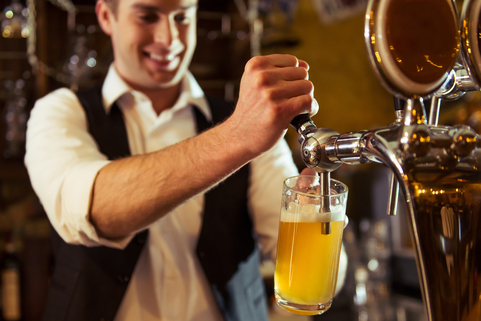 On-licences include pubs, bars, nightclubs, restaurants, taprooms, casinos, hotel bars/lounges open to non-guests, etc.
Licensed Hours
Scotland has no fixed national hours for drinking on the premises – each of the 35 Licensing Boards (across 32 authorities) sets typical terminal hours in its policy. This is typically midnight or 1am for pubs, while late-night venues like nightclubs and casinos can trade until 3am or 4am on Friday and Saturday nights in some major city-centre areas. There is a strong statutory presumption against 24 hour opening under Section 64 of the Licensing (Scotland) Act 2005 unless exceptional circumstances apply.
General & Festive Extensions
Licensing Boards often grant “General Extensions” under Section 67 for events of local or national significance, such as Hogmanay or the Edinburgh Fringe Festival. During December, many Boards grant a blanket one-hour extension to all nightlife venues. For major sporting events, these extensions allow eligible venues to trade late without individual applications.
Individual Extended Hours Applications
For one-off events that aren’t covered by a general extension (like a wedding, charity fundraiser or a specific local party), a venue must submit an individual application under Section 68. These “Extended Hours” applications are distinct from general ones; they must be applied for separately by the licensee and can be granted for a period of up to one month.
Entry Curfews & Readmission
During late-night extensions, some Licensing Boards enforce an entry curfew, effectively setting a last entry time (often midnight or 1am). This applies to both first-time arrivals and those seeking re-entry; once this time passes, no new customers can enter and if an existing customer leaves after this time, they cannot be readmitted, even if the venue remains open until 3am or 4am for those already inside. Furthermore, sporting extensions typically only apply while a live match is being broadcast; many Boards specifically mandate that the extension expires 30 minutes after the final whistle (including extra time and penalties), meaning venues cannot usually remain open late for general entertainment once the broadcast ends.
Last Orders – Drinking-Up Time
After last orders have been called (“Time, gentlemen, please!“) and the bar closes for the night, a 15 minute drinking-up time applies as standard, or 30 minutes if the drink is consumed with a meal. This allows customers to finish drinks already served. Note that venues are not legally obliged to provide the full grace period and can ask patrons to leave earlier.
The Clock Change Rule (Daylight Saving Time)
A common question by drinkers at late-night venues is what happens when the clocks go forward or back. Under Section 66, there is a specific legal fix: a venue’s closing time is determined by the number of hours they are authorised to trade after midnight, rather than the actual time on the clock. This ensures that if a nightclub is licensed to stay open for 4 hours after midnight (until 4am), they don’t “lose” an hour of trading when the clocks jump forward, or “gain” an extra hour of sales when the clocks go back. For example, if you are at a venue with a 4am licence when the clocks go forward in spring, you don’t lose an hour of drinking; the venue simply stays open until the “new 5am”. Conversely, when clocks go back in autumn, you don’t get a “bonus” hour of alcohol sales; the venue closes at the “new 3am”. So you essentially get the same total amount of drinking time as any other night.
Continue scrolling for details on off‑sales (including pub carry‑outs), plus special rules for airports and hotels – the only places where 24 hour alcohol sales are legally possible in Scotland.
Draught beer accounts for 44% of all sales value in Scottish public houses & bars, showing that ‘going for a pint’ remains the main draw for pub-goers.
Alcohol Times for Off-Sales (Shops)
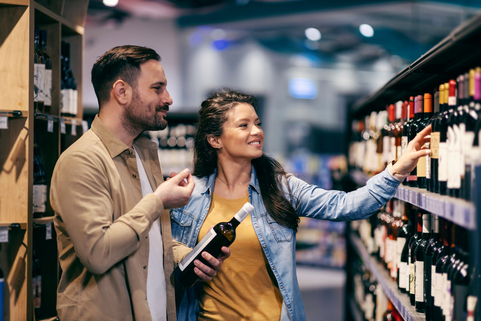 Off-licences include supermarkets, superstores, convenience stores, corner shops, licensed grocers, wee shops, carry-outs, bottle shops, petrol stations/garages, online-only retailers/delivery services, etc.
Licensed Hours
Permitted hours for premises licensed to sell alcohol for consumption off the premises are:
• Monday–Sunday: 10am–10pm
Off-sales times are fixed in law (Section 65 of the Licensing (Scotland) Act 2005 and mandatory conditions) and apply every day, including over Easter, Christmas, Hogmanay/New Year and Bank Holidays.
Discretionary Alcohol Sales Times
The 10am-10pm window is a statutory maximum, not a guaranteed right. Alcohol can only be sold during the specific hours listed in a shop’s individual Operating Plan, which may be shorter than the national maximum. For example, some local Licensing Boards still maintain policies that restrict off-sales to a later start on Sundays (such as 11am or 12:30pm) or enforce earlier closing times in specific “overprovision” areas. Furthermore, retailers can choose to restrict sales even further for operational reasons – meaning a 24 hour supermarket may decide to stop selling alcohol at 9:30pm even while staying open for general groceries.
Strictly No Late Night Off-Licences Allowed
Scottish Licensing Boards are statutorily required to refuse any off-sales applications for sales outside of the 12-hour window of 10am–10pm, offering none of the local flexibility available for on-sales premises like bars or clubs. This strict nightly ban is often referred to as an “alcohol curfew”. Once the clock strikes 10pm, the legal window for purchasing alcohol is closed, making that 9:57pm sprint to the supermarket checkouts the most stressful Olympic sprint in Scotland!
15-Minute Removal Rule
While the sale of alcohol by retail must stop at 10pm sharp, Section 63(2)(b) allows a tiny “buffer” for the physical removal of the goods; any alcohol legally purchased before 10pm must be taken off the premises by 10:15pm at the latest (excluding alcohol being removed for delivery). Off-licences remaining open outside of these hours, such as 24 hour shops, often use shutters, lockable cabinets or barriers to block off aisles during the curfew hours to ensure no transactions occur after the 10pm deadline, though these are practical compliance measures rather than a specific legal mandate to physically seal the area.
Off-Sales from On-Sales Premises (Pub Carry-Outs)
Most pubs have the right to sell alcohol for consumption off the premises (carry-outs). It is important to note that the 10pm–10am alcohol curfew applies to ALL off-sales, including those from pubs, bars and restaurants. Even if a drinking establishment is licensed for on-sales until midnight or 3am, any alcohol sold for consumption off the premises must strictly cease at 10pm sharp. There is no late-night “cairry-oot” loophole! Just like shops, pubs are bound by the 15-minute removal rule. Any carry-out bought before 10pm must be physically taken out of the building no later than 10:15pm. Under Section 63, it is actually a criminal offence for staff to “allow” alcohol to be taken away after this time. This means if you buy a bottle of wine to take home at 9:55pm but linger to finish a pint, the staff are legally required to make sure you – and your bottle – are out the door by 10:15pm.
Alcohol Delivery Rules
Online orders and deliveries count as off-sales too – you can place an order anytime (such as online, via an app or by phone) but legally the completion of the transaction (payment) must occur during standard off-sales hours of 10am-10pm. Delivery can take place at any time except between midnight and 6am, when deliveries of alcohol to non‑licensed premises are banned (Section 120). Delivery drivers/riders must carry an invoice or delivery book with details of the booze and recipient – and alcohol deliveries can only be made to the address specified in the delivery records. This prevents roaming “mobile bars” or “dial-a-drink” services from selling to people on the street or changing destinations mid-route. Legally the recipient doesn’t necessarily have to be the person who ordered the alcohol, but they must be 18 or over (some online delivery portals may have their own policies requiring the person ordering to accept the delivery). These rules apply whether ordering via major national third-party food & drink delivery platforms such as Just Eat, Uber Eats and Deliveroo or directly from a retailer. So if you place an order with an on-demand alcohol delivery service at 9:55pm and the payment is processed before the 10pm deadline, the firm can legally deliver any time afterwards, as long as it is not between midnight and 6am. Supermarket chains offering grocery delivery, like Tesco, Sainsbury’s, Morrisons, Asda, Waitrose and Iceland only allow customers to select delivery slots between 10am-10pm for orders containing alcohol. Any services in Scotland advertising after‑hours or all‑night alcohol delivery are almost certainly operating illegally, given the 10am–10pm off-sales window and the midnight-6am delivery ban.
Late Night Cross-Border Booze Runs
If you live near the Anglo-Scottish border (AKA English-Scottish border) and you’re really eager to buy booze after 10pm at night, you could always pop down to England and visit a 24 hour off licence, assuming, of course, that you have a sober driver up for a road-trip! The 24 Hour Alcohol database contains details of all shops with 24 hour alcohol licences in England & Wales – with the nearest outlets to Scotland located in Cumbria and Northumberland. With Minimum Unit Pricing applying to alcohol sales in Scotland but not England, a late night booze-run may not be such a bad idea. However, it is important to remember that in England, prices vary significantly between retailers. While the 24 hour petrol stations in Cumbria and Northumberland are the closest options, they often charge higher convenience prices. For the cheapest late night booze if you’re buying in bulk, you really need a large supermarket chain. Asda is now the only major retailer to still operate 24 hour superstores, with the nearest in Newcastle and Gateshead – these superstores are licensed to sell alcohol round-the-clock and are open 24 hours most of the week, though they close on Saturday and Sunday nights due to English Sunday Trading Restrictions (details below).
Over three quarters of all alcohol sold in Scotland is purchased through off licences (shops).
Other Trading Restrictions on Opening Times at Large Stores
Christmas & New Year Opening Restrictions
Under the Christmas Day and New Year’s Day Trading (Scotland) Act 2007 large shops with a trading floor area exceeding 3,000 square feet (280 square metres) are prohibited from opening for retail sales on Christmas Day. While the Act gives the Scottish Government the power to also mandate closure on New Year’s Day, this power has not been exercised to date. Therefore, New Year opening remains at the discretion of the retailer, and many major supermarkets choose to open on New Year’s Day. Small shops under the 3,000 sq ft threshold, as well as certain businesses like petrol stations, pharmacies, and shops in travel hubs (like major airports and railway stations), are exempt and may trade on both Christmas Day & New Year’s Day (up to 24 hours if they wish). There are no restrictions on Christmas Eve, Boxing Day, New Year’s Eve, Good Friday, Easter Sunday, Easter Monday, Public/Bank Holidays or any other day of the year.
Sunday Trading Restrictions
There are no Sunday trading restrictions in Scotland, unlike the rest of the UK where large shops/supermarkets over 3,000 square feet (280 square metres) can only open for limited times on Sundays: in England & Wales for a maximum of six continuous hours between 10am and 6pm, and in Northern Ireland fixed from 1pm to 6pm. These Sunday restrictions typically affect large supermarkets and superstores from the big grocery chains like Tesco, Sainsbury’s, Morrisons, Asda, Aldi, Lidl, Co-op, Iceland, Waitrose and Marks & Spencer (M&S Food). Wee shops, convenience stores, carry-outs and petrol stations/garages of any size, are not affected and are free to trade 24 hours on Sundays across the whole of the UK. The implications of Sunday restrictions in England, Wales & NI means large 24 hour supermarkets & superstores have to close by 11:59pm on Saturday night, reopen for limited Sunday trading hours and then resume full 24 hour operations from Monday morning. Scotland has no separate Sunday trading laws restricting large supermarkets, which means it is the only place in the UK where big supermarkets can remain open 24/7 (though they must, of course, follow the Scottish 10am–10pm off-sales rule for alcohol).
Read more about the times shops start and stop selling alcohol across the UK: What time do supermarkets sell alcohol in the UK?
Asda is the only major supermarket chain in the UK with large superstores still open 24 hours a day, as Tesco transitioned away from around-the-clock opening at Extra and Superstore locations following the pandemic. In England & Wales, these stores are usually licensed to sell alcohol 24 hours but due to their large size are restricted by Sunday Trading laws from opening 24 hours on Sundays, while in Scotland they can open 24/7 but are strictly prohibited from selling alcohol from 10pm at night until 10am the following morning.
24 Hour Alcohol at Airports
One place you can buy alcohol 24 hours in Scotland is at designated airports. Under Section 124 of the Licensing (Scotland) Act 2005, standard licensing laws do not apply to “airside” areas (past security) at designated international airports: Aberdeen, Edinburgh, Glasgow, Glasgow Prestwick, Inverness and Sumburgh. This 24 hour airside exemption is a standard feature across all major international airports in the UK.
This creates a unique statutory exemption where “airside” premises do not even require a premises licence to sell alcohol and are therefore not bound by Scotland’s standard alcohol sales times. While a shop in the terminal’s public check-in area (“landside”) may only sell alcohol 10am-10pm, and a landside pub must stick to its specific licensed hours, you can legally purchase a pint in a departure lounge bar or a bottle of gin from the duty-free shop at any time once you have cleared security (subject to opening hours at individual venues/outlets, which typically align with flight schedules).
While standard liquor licensing laws do not apply airside, other laws remain strictly in force. Police Scotland and airport security maintain a zero-tolerance policy towards antisocial behaviour. Under the Air Navigation Order 2016, it is a serious criminal offence to be drunk on an aircraft. Airlines and ground staff have the absolute right to refuse boarding to any passenger they believe is intoxicated, regardless of what time their flight departs. Furthermore, most duty-free alcohol is sold in sealed, tamper-evident bags and is not for consumption at the airport or on the aeroplane.
Alcohol Times for Hotels, Guesthouses, Inns and B&Bs
On-licences for hotels in Scotland are determined by their individual premises licence. While public bars, lounges and restaurants within a hotel must follow the standard opening hours set by the local Licensing Board (just like any other pub), bona fide overnight residents (guests staying in a room) and their personal guests often have 24 hour access to alcohol if the licence allows. This is usually provided via minibars, room service or residents-only bars.
Under Section 63(2)(c) of the Licensing (Scotland) Act 2005, there is a specific exemption that allows for the sale and consumption of alcohol at any time to those residing on the premises. This means if you are staying in a licensed hotel, guesthouse, inn or bed & breakfast, you can legally purchase and consume alcohol well after the 10pm off-sales curfew or the local pub’s closing time.
However, Scotland’s licensing regime maintains a strong presumption against routine 24 hour opening for the general public. This 24 hour resident service is a common, board-approved exception strictly for those staying at the hotel and their accompanied guests. While major chains like Hilton, Marriott and Dakota in cities like Glasgow and Edinburgh provide 24 hour room service or residents-only lounges as standard, smaller hotels or B&Bs may technically hold these permissions but choose to stop service once staff have gone off-duty. Finally, this exemption only applies to licensed accommodation; it does not extend to unlicensed self-catering lets or Airbnbs.
For over a century (1853–1962), hotels were the only places in Scotland where you could legally buy a drink on a Sunday. Under the “Bona Fide Traveller” rule, you could only be served if you had travelled at least three miles from where you slept the night before. This led to thousands of people “travelling” to the next village just to sign a register and gain access to the bar. While the traveller requirement was repealed in 1962, it wasn’t until 1976 that standard pubs were finally allowed to open their doors on Sundays, ending the hotel monopoly for good.
Minimum Unit Pricing (MUP) in Scotland
Scotland was the first country in the world to introduce a minimum legal price for alcohol to reduce health-related harms, which came into effect on 1 May 2018. It is important to understand that MUP is not a tax; the extra money from higher prices goes to the retailer, not the government.
• The Current Rate: As of 30 September 2024, the Minimum Unit Price increased from 50p to 65p per unit. This applies to every single drop of alcohol sold to the public in Scotland, whether in a supermarket, a corner shop, or a pub.
• How it Affects Prices: Because the price is based on the amount of pure alcohol (strength x volume), it primarily targets “cheap, high-strength” drinks like industrial ciders and budget spirits.
• Price Examples: Under the 65p rate, you cannot legally buy these alcoholic beverages for less than:
˚ Whisky (70cl, 40%): £18.20
˚ Vodka/Gin (70cl, 37.5%): £17.07
˚ Wine (75cl, 13%): £6.34
˚ Beer (4 x 440ml cans, 5%): £5.72
• Banned Discounts: To comply with MUP, retailers are prohibited from applying vouchers, coupons, multi‑buy or “buy‑one‑get‑one‑free” deals if the effect would be to bring the price of a drink below its minimum legal limit. If you find a bargain that looks too good to be true, it likely is. Most supermarkets use automated till systems that will simply refuse to process a sale if the price doesn’t meet the 65p per unit requirement.
MUP Loophole: Cross-Border Delivery
Unlike Scotland and Wales (both with MUP), England has no minimum unit pricing. This means English retailers can legally sell cheaper alcohol and deliver it to Scottish addresses without applying the 65p per unit minimum. Services like Amazon, Tesco Wine Direct, or specialist online booze shops based in England often undercut Scottish high street prices because MUP doesn’t apply to cross‑border deliveries. Always check the retailer’s base location before ordering – if it’s England‑based with delivery to Scotland, you’ll bypass MUP entirely.
Local By-laws Prohibiting Street Drinking
Currently, 27 out of 32 local authorities in Scotland have by-laws in place, covering more than 480 towns and villages. While these rules vary, they generally make it a criminal offence to consume alcohol or possess an open container in any public place (including streets, parks and car parks) at any time. Doing so can result in immediate confiscation by police and/or a substantial fine (e.g. £500 for a fixed penalty notice in Glasgow).
The scope of these laws varies significantly across the country:
• Council-Wide Bans: Major cities including Glasgow, Dundee and Aberdeen have strict, blanket by-laws covering the entire built-up city area.
• Specific “Hotspots”: Other councils only restrict drinking in specific town centres or designated antisocial areas. Edinburgh is the most famous example; it has no blanket ban, meaning drinking in public is generally permitted unless it causes a nuisance or a police officer requests you to stop.
• The Rural Exception: These by-laws are designed for population centres. If you are in the remote Highlands or the middle of a national park, you are typically outside the by-law zones and are free to enjoy a drink responsibly.
• Hogmanay Suspensions: Many bans are automatically suspended for New Year celebrations. Glasgow City Council, for example, traditionally lifts its ban for a 12-hour window from 6pm on 31 December to 6am on 1 January.
Because rules can differ by street or town, it is always best to check specific local council by-laws. You can find out which Scottish councils prohibit drinking alcohol in public places on mygov.scot.
Alcohol on Public Transport
While you can generally carry unopened alcohol in a bag (except when travelling to some sporting events), strict exceptions apply depending on the mode of transport and the purpose of your journey:
• ScotRail Trains & Stations: Following a government review in 2025, the blanket ban was removed. You can now legally drink on ScotRail trains between 10am and 9pm. Drinking is still banned on all trains from 9pm–10am and is prohibited at all times within stations and on platforms. ScotRail and the BTP can enforce total bans on specific “dry trains” for sporting events or concerts; on the ScotRail app, you can check for the “No Alcohol” icon (a crossed-out glass) next to specific services to see if it has been designated a “dry train” for a specific event. Additionally, Railway Byelaw 4 allows staff to refuse travel to anyone carrying visible alcohol if they believe it is necessary to prevent antisocial behaviour.
• Buses & Coaches: Most major operators (e.g. First Bus, Stagecoach, McGill’s, Lothian Buses, West Coast Motors, Xplore Dundee, Scottish Citylink and National Express) maintain a total 24/7 ban on alcohol consumption on their vehicles.
• Sporting Events: It is a criminal offence to CARRY alcohol (even unopened in a bag) on any train, bus, coach, or minibus (with more than 8 passenger seats) specifically travelling to or from a designated sporting event. In Scotland, this “designation” applies to all senior football matches, including the SPFL, Highland and Lowland Leagues, Scottish Cup, League Cup, and International association football matches. This law applies to both public transport and private rentals if the principal purpose of the journey is carrying fans to or from the game. Both the passengers and the person in charge of the vehicle (the driver or the person who hired it) can be prosecuted if alcohol is found on board.
History of Permitted Hours in Scotland (Pre-2009)
Before the Licensing (Scotland) Act 2005 took full effect on 1 September 2009, the Licensing (Scotland) Act 1976 set rigid “permitted hours” for pubs. This originally involved split afternoon and evening sessions, with no all-day drinking as standard.
On-Sales
Pubs, bars and hotels typically operated with a “split-shift” system: weekday and Saturday lunchtime/afternoon 11am-2:30pm and evenings 5pm-11pm. Sundays were lunchtime/afternoon 12:30pm-2:30pm and evenings 6:30 pm-11pm. While this was a major step up from the total Sunday closures of the early 20th century, the system loosened quickly. By 1978, cities like Glasgow began using “afternoon extensions” to allow all-day opening, a practice that became the national norm by the early 1990s. The 2005 Act eventually replaced “permitted hours” with Operating Plans, where venues propose their own hours – usually capped at 14 hours per day under local Licensing Board policy, though 24 hour licences are legally possible in exceptional circumstances.
Off-Sales
Shops and supermarkets originally enjoyed a more generous morning window than today, trading Monday to Saturday from 8am-10pm. However, Sunday off-sales were entirely banned until 1991, when they were permitted from 12:30pm-10pm. This 12:30pm Sunday start time remained the law until the 2005 Act introduced the uniform 10am opening in 2009.
Drinking-Up Time
The 2005 Act formalised “drinking-up time” to prevent the “last-orders rush”. This provides a standard 15 minutes to finish a drink after last orders have been called and the bar shuts, or 30 minutes if the drink is consumed with a meal.
When the 1853 Forbes Mackenzie Act banned Sunday drinking in pubs, it created a massive legal loophole for paddle steamers cruising the River Clyde. Because the ships were “in transit” they were not bound by land-based closing laws. This led to the famous “Sunday Cruise”, where thousands of Glaswegians would board the steamers for a day of heavy drinking while sailing “doon the watter”. It is widely believed in Scottish folklore that the term “steaming” (meaning heavily intoxicated) originated from the sight of passengers stumbling off these steamships after a full day of Sunday drinking.
History of COVID-19 Emergency Restrictions (Temporary)
The 10pm “Hard” National Curfew (September 2020 – May 2021)
Introduced in Scotland on 25 September 2020, this rule forced every pub, bar, and restaurant to be empty by 10pm. Crucially, unlike standard licensing, there was no 15-minute drinking-up time; premises had to be closed and patrons out by 10pm sharp. This famously led to “10:01pm street parties” as thousands were ejected simultaneously.
The Total Indoor Alcohol Ban (October 2020 – May 2021)
On 9 October 2020, a nationwide ban on selling alcohol inside any hospitality venue was introduced. In the Central Belt (including Glasgow and Edinburgh), all licensed premises closed entirely; elsewhere, they could open until 6pm for food and soft drinks only. This “indoor drought” lasted until 26 April 2021, when indoor alcohol was finally permitted again, but only with a meal.
The “No Music” Rule (August 2020 – December 2020)
In a move unique to Scotland, the government banned background music and muted televisions starting on 14 August 2020. The logic was to prevent customers from leaning in and shouting, which was thought to increase aerosol transmission. Following intense pressure from the Scottish Hospitality Group, the ban was lifted on 12 December 2020, provided music remained at a strictly “low level”.
The “Main Meal” Rule (October 2020 – May 2021)
Alcohol could only be served indoors with a “main meal” (defined as a breakfast, lunch or dinner). This was stricter than the English “substantial meal” rule, aimed at preventing light snacks from being used as a loophole. This requirement was finally scrapped on 17 May 2021, allowing indoor sales to resume without food.
The End of All Legal Restrictions (March 2022 – April 2022)
Scotland officially moved away from legal alcohol curfews and capacity limits on 21 March 2022, when the remaining baseline restrictions for hospitality were replaced with public health guidance, revitalising a struggling night-time economy. This marked the final return to the standard “Operating Plan” hours set by local Licensing Boards. The last remaining legal mandate – the requirement for customers to wear face coverings when moving around bars and restaurants – was finally lifted on 18 April 2022, officially closing the “Pandemic Era” for the Scottish on-trade.

Availability of Alcohol Late Night Elsewhere in the UK
Alcohol Times in England & Wales
In England and Wales the Licensing Act 2003 (AKA the “24 hour drinking” law) allows premises to apply to their local licensing authority (council) to sell alcohol 24 hours a day, although that doesn’t mean they will be granted the hours they desire. Each premises licence is decided individually based on location, need and public safety considerations, so you can end up with two licensed premises next to each other that have completely different alcohol times.
Some 24 hour shops are licensed to sell alcohol all night, others have to stop serving overnight. This made it extremely difficult to know which shops are authorised to sell alcohol “after hours”, and which stop alcohol sales overnight. To solve this problem, we compiled, and continue to maintain, a database of all 24 hour off licences across the whole of England & Wales. Our database contains details of all offies licensed to sell alcohol all hours, from big supermarkets and superstores to convenience stores, corner shops, newsagents, carry out, and petrol filling stations/garages. Over 300 English & Welsh licensing authorities are covered. Find out more about supermarkets, corner shops & petrol stations with 24 hour alcohol licences, including their locations, and more details about how licensing laws work down south. We also have a store finder for 24 hour shops in England & Wales licensed for alcohol sales all hours which shows the nearest retailers based on your search location, which may come in handy if you’re ever visiting and fancy a late night bevvy. No more arriving at a shop that’s open 24hrs, only to find they’ve closed the alcohol department and stopped selling for the night.
The on-demand drinks delivery sector has seen a boom in recent years and there are now many instant alcohol delivery services licensed and open 24/7, delivering a range of booze within just minutes of an order being placed online, via an app or over the phone. It’s not just beer, wine & spirits available for quick home delivery, but also soft drinks, cigarettes/tobacco, vapes, snacks, ice cream, groceries and everyday essentials. Some alcohol delivery providers offer a basic range of products, while others specialise in offering a wide variety of beverages from the UK and abroad, with a comprehensive selection of beer, ale, lager, cider, wine (red, white, rosé, sparkling), champagne, vodka, gin, whisky, rum, brandy & many other spirits.
24 hour pubs, bars and nightlife venues are rare – even when licensed 24 hours, most don’t open round the clock. Although these venues don’t operate 24/7, many towns and cities offer late night, or even all night (open until the wee small hours of the morning), nightlife options so it shouldn’t be too hard to find a drinking establishment open late.
Alcohol Times in Northern Ireland
Northern Ireland use court-based licensing rather than local boards and has a restrictive liquor licensing regime compared to England & Wales – no 24 hour sales or extensions like the Licensing Act 2003 allows down south. Off-licences (shops) run from 8am-11pm Monday-Saturday (longer than Scotland’s 10am-10pm daily), and 10am-10pm Sunday (same as Scotland). On-sales (pubs, bars, nightclubs etc.) follow fixed hours of 11:30am–11pm Monday–Saturday and 12:30pm–11pm Sunday, with late extensions possible up to 2am for some venues (for a maximum of 104 nights per year), though this still falls short of the 3am or 4am terminal hours found at nightclubs in Scotland’s major cities. See our guide to Northern Ireland alcohol licensing times for full details of the hours alcohol can be sold in NI, including details of shop licensing times along with pub, bar and nightclub serving/closing times, plus special rules for alcohol sales times at airports and hotels.
Liquor Licensing Stats: Number of Licensed Premises in Scotland
According to the latest official Scottish Liquor Licensing Statistics, there are approximately 16,600 premises licences in force across the country. While the total has remained stable since 2009, the “Combined” licence has become the industry standard for hospitality:
• Combined On-and-Off-Sales: Approximately 6,900 licences – this is now the most common category, covering the vast majority of pubs, restaurants, and hotels. It provides the flexibility to serve drinks on-site while also allowing carry-outs until the 10pm off-sales cut-off.
• Off-Sales Only: Approximately 5,100 licences – dedicated retailers such as supermarkets, convenience stores, specialist bottle shops and alcohol delivery services.
• On-Sales Only: Approximately 4,700 licences – a shrinking category usually reserved for nightclubs, theatres, or members’ clubs that do not offer carry-out/takeaway sales.
Unsurprisingly, Glasgow City and the City of Edinburgh host the highest density of licences, accounting for nearly a quarter of all premises in Scotland. For the most up-to-date breakdown, including local board variations, you can view the full Scottish Liquor Licensing Statistics on the gov.scot website.
Long before the 2005 Act, Edinburgh’s famous 18th-century Oyster Cellars were among the first venues to operate what we now call a “Combined” licence. Local magistrates granted these popular underground haunts dual permission to sell ale by the glass for drinking in, or by the jug for “takeaway”. While Enlightenment thinkers loved them, temperance reformers later attacked these hybrid premises as “moral gateways to drunkenness”. Today, that same flexibility remains the industry standard, accounting for the majority of Scotland’s modern liquor licences.
Scotland’s Licensing Authorities & Licensing Boards
Scotland has 32 licensing authorities (one for each council area), but currently operates with 35 active Licensing Boards. While most councils have consolidated their divisions into a single board to standardise policy – reducing the total from 40 in recent years – South Lanarkshire remains the exception, divided into four divisions: Clydesdale, East Kilbride, Hamilton, and Rutherglen & Cambuslang.
Aberdeen City, Aberdeenshire, Angus, Argyll & Bute, Clackmannanshire, Comhairle nan Eilean Siar (Western Isles), Dumfries & Galloway, Dundee City, East Ayrshire, East Dunbartonshire, East Lothian, East Renfrewshire, Edinburgh, Falkirk, Fife, Glasgow City, Highland, Inverclyde, Midlothian, Moray, North Ayrshire, North Lanarkshire, Orkney Islands, Perth & Kinross, Renfrewshire, Scottish Borders, Shetland Islands, South Ayrshire, South Lanarkshire (4 divisions), Stirling, West Dunbartonshire and West Lothian.
How Premises Apply for Alcohol Licences in Scotland
Unlike the council-led process in England & Wales, Scotland’s 35 local Licensing Boards (across 32 authorities; South Lanarkshire is split into 4) grant licences under the Licensing (Scotland) Act 2005. All decisions must promote five key objectives, most notably protecting and improving public health – a requirement unique to Scotland.
Applicants must submit a detailed Operating Plan specifying their requested hours. For Off-Sales (Shops), the law is rigid: Boards are prohibited from granting any hours outside the national 10am–10pm window. For On-Sales (Public Houses & Clubs), Boards have more discretion but publish policies on “overprovision” (areas deemed to have a surplus of licensed premises). There is a strong statutory presumption against 24 hour opening, with “exceptional circumstances” required for any trading beyond the 14-hour benchmark set by most Boards. Before a final decision is made, Boards consult with Police Scotland, local Health Boards and Licensing Forums. For more details, view the Scottish alcohol licensing guidance on the gov.scot website.
Every new alcohol application in Scotland must be advertised via a bright blue public notice displayed at the premises for 21 days. This is a deliberate “low-tech” way to ensure local residents have the chance to see the requested hours and object. If the sign falls down or is obscured for even a few hours, the applicant may have to start the 21-day countdown all over again!
Mandatory Conditions
The Mandatory Conditions are a set of national rules that apply automatically to all licensed premises in Scotland. While the full legal text in Schedule 3 of the Licensing (Scotland) Act 2005 is detailed, the core requirements are quite concise and focus on safe, responsible operations. Here is a summary of the key conditions that every premises must follow:
• Designated Premises Manager (DPM): Every premises must have a designated manager who holds a Personal Licence.
• Authorisation of Sales: Every sale of alcohol must be specifically authorised by the Designated Premises Manager (DPM) or another Personal Licence holder.
• Staff Training: All staff selling or serving alcohol must receive at least 2 hours of mandatory training before starting; a written record of this training must be kept on the premises.
• Minimum Unit Pricing (MUP): Alcohol cannot be sold below the statutory minimum price per unit.
• Irresponsible Promotions: “Happy Hour” style deals, drinking games, or any promotion that encourages speed-drinking or large quantities (e.g. “all you can drink” for a fixed fee) are strictly banned.
• 72-Hour Price Rule: For off-sales, the price of an individual product cannot be changed unless that new price remains in place for at least 72 hours.
• Age Verification: Premises must have a policy to check the ID of anyone who appears to be under 25 years of age (the “Challenge 25” standard).
• Free Tap Water: Premises licensed for on-site consumption must provide free tap water on request.
• Baby Changing: On-sales premises that admit children under 5 must provide gender-neutral baby changing facilities.
• Required Notices: Specific signs must be displayed at every entrance regarding whether children and young persons are permitted, and at every point of sale regarding the offence of underage drinking.
Scottish Licensing Glossary
Definitions of key terms from the Licensing (Scotland) Act 2005:
These terms define the rules and policies the entire system must follow.
• Licensing Objectives: The five core aims all decisions must promote: 1) Preventing crime and disorder, 2) Securing public safety, 3) Preventing public nuisance, 4) Protecting and improving public health, and 5) Protecting children and young persons from harm.
• Licensing Policy Statement: Published by each Board every 5 years (within 18 months of a local election), outlining local rules like typical hours and overprovision.
• Overprovision: A policy where a Board may refuse new licences if they determine a specific area already has enough (or too many) licensed premises.
The people and groups that manage and enforce the rules.
• Licensing Board: An independent body made up of local councillors. They are responsible for setting local licensing policy, deciding on licence applications, and conducting review hearings. Although they consist of councillors, they operate independently from the main Council.
• Licensing Standards Officer (LSO): A council employee who inspects premises, ensures compliance, and mediates between the trade and the public.
• Licensing Forum: A local advisory group (police, health, trade, community) that comments on policy but cannot influence individual licence applications.
• Any Person (Objector): Any individual or group can object to a licence application as long as the objection is not “frivolous or vexatious.”
The individuals responsible for the sale of alcohol.
• Licence Holder: The person or company named on the licence; they are ultimately responsible for the premises. Commonly called “licensee” or “landlord/landlady” for pubs. Under the principle of Vicarious Liability, they can be held legally responsible for the actions of their staff (e.g. an illegal sale) even if they were not present.
• Personal Licence: A 10-year renewable licence allowing an individual to supervise alcohol sales; requires refresher training every 5 years.
• Designated Premises Manager (DPM): A mandatory role; every premises must have one designated individual who holds a personal licence and runs the day-to-day business. The Act uses “Premises Manager” but industry/Licensing Boards universally call it DPM.
The specific types of legal permission granted.
• Premises Licence: The permanent permission for a specific building to sell alcohol.
• Operating Plan: Part of the licence detailing the layout, activities, and how the premises will meet the five objectives.
• Occasional Licence: A temporary (up to 14-day) licence for events held on premises that don’t have a permanent licence.
• Extended Hours: A request for a permanent licence holder to stay open later for a specific one-off event.
• Provisional Premises Licence: A “pending” licence for a building still under construction; it must be confirmed before alcohol can be sold.
How licences are managed or corrected over time.
• Blue Notice (Public Notice): A statutory notice printed on pale blue paper (A4 or larger) that must be displayed at or on the premises for 21 continuous days following a new licence or major variation application. It must be easily readable from the exterior to allow the public to view the proposal and submit any objections.
• Minor Variation: A fast-track process for small changes (e.g. updating the Designated Premises Manager) that does not require a Blue Notice or a public hearing.
• Review Hearing: A formal Board meeting to address complaints; results can include warnings or the suspension/revocation of a licence.
• Licensing Register: The official public record of all local premises, personal, and occasional licences, as well as Licensing Board decisions. It must be available for public inspection at council offices during reasonable hours, though many Boards also provide online access.
🔞 The statutory legal age to purchase alcoholic beverages is 18 in Scotland or anywhere else in the UK. All licensed premises in Scotland partake in “Challenge 25”, which means if you look under 25 years old, you’ll be asked to provide proof of age to confirm you’re over 18.